|
|
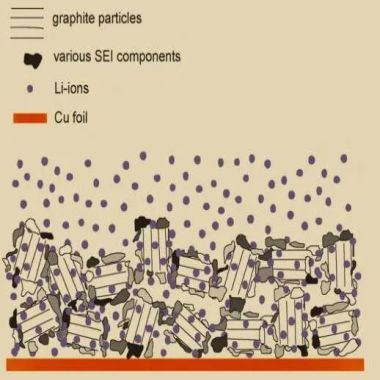
In the production process of lithium-ion battery, chemistry is an extremely important step, which mainly includes the first charging process of the cell after the cell is filled with liquid, which will activate the active material in the cell and make the lithium-ion battery activated; at the same time, the electrolyte solvent and lithium salt will react and form a solid electrolyte phase interface (SEI) film in the negative electrode of the lithium-ion battery. This layer will prevent further side reactions from occurring and thus reduce the loss of lithium content in Li-ion batteries, and therefore it has a significant impact on the initial capacity loss, cycle life, multiplier performance and safety of Li-ion batteries. This paper describes the formation mechanism of SEI films and the formation process, and summarizes the effects of three factors of the formation process on SEI films and on the performance of lithium-ion batteries. Focusing on Si-based anode materials with high capacity but large volume expansion, the paper discusses how to find the optimal formation conditions by controlling various factors of the formation process, and then improve the performance of lithium-ion batteries with practical Si-based anode materials. Translated with www.DeepL.com/Translator (free version) SEI Membrane Introduction 1.1 SEI membrane formation mechanism During the process of SEI film formation, electrolyte solvents, lithium salts, additives, trace air impurities, etc. undergo various reduction reactions. This series of reactions is influenced by both the inherent properties of substances such as reduction potential, reduction activation energy, and exchange current density, and other factors such as temperature, electrolyte salt concentration, and reduction current. The combination of these factors makes the process of SEI film formation complex and the formation mechanism difficult to understand clearly. It is generally believed that the SEI film is generated by two processes: first, the negative electrode of the battery is polarized and the organic electrolyte solution components undergo reductive decomposition to form new chemical products; then, the newly generated products are precipitated on the negative electrode surface to form the SEI film. In the study of SEI film formation mechanism, the controversial points mainly focus on the process of reduction reactions, especially the reduction reaction of electrolyte solvent molecules. These processes of reduction reactions are the processes of electron transfer to salt and solvent in the electrolyte solution obtained from the negative polarization of the cell, thermodynamic simulation, ion particle size, etc. Three possibilities exist for this process: one is that the lithium ion alone during the reduction reaction is directly embedded in the negative graphite layer to complete the embedding; the other is that the reduction reaction of the solvent molecule is a one-electron reaction that produces an intermediate product, a radical anion, which undergoes further The second is that according to the hypothesis of Aurbach et al. the reduction reaction of solvent molecules is a one-electron reaction, which produces an intermediate product, a radical anion, which is further decomposed and combines with lithium ions to produce a precipitated material that becomes a SEI membrane component, while according to the hypothesis of Dey, Besenhard and Chung et al. -ternary graphite intercalation compound, which is subsequently reduced to form SEI film; thirdly, the negative electrons are directly transferred to the anionic salt to generate inorganic salt precipitation directly with lithium ions. 1.2 Structure and properties of SEI membrane In the actual lithium-ion battery chemistry process, the structure of the SEI film is very complex due to its complex chemistry, high impurity content and uneven current distribution. The mainstream view is that it is a two-layer structure: the side near the electrolyte is porous and loose, mostly composed of organic compounds, and the voids in this layer are filled by the electrolyte, and the structure of this layer may undergo further reduction and morphological changes during subsequent cycles; the side near the negative electrode is mainly composed of inorganic compounds, and the layer has fewer pores and a compact structure. The SEI membrane is a fragile thin layer structure, fully formed with high lithium ion conductivity and negligible electron conductivity, sufficient flexibility and strong enough to prevent further reduction reactions of the electrolyte on the cathode surface; the ion conductivity allows lithium ions to be embedded in the cathode through the SEI membrane; the SEI membrane is strong enough and flexible enough to avoid the rupture of the SEI membrane during lithium ion de-embedding. The SEI film is strong and flexible enough to avoid the rupture of the SEI film due to the volume change of the cathode material during the lithium ion de-embedding process. At the same time, there is a large enough molecular force between the SEI membrane and the cathode surface, which can avoid further polarization reactions subsequently. Since there are many reactants to generate SEI films, and the electrolyte components are not fixed and the reaction conditions vary, the reduction reaction produces a wide variety of products, and the components of SEI films measured by different research groups are different, but in general there are some common patterns, for example: when fluorinated salts such as LiAsF6, LiPF6, LiBF4 are present in the electrolyte, the fluorinated salts undergo the reduction reaction and precipitate as When the carbonate in the electrolyte reacts with lithium salt, it will precipitate as Li2CO3, ROCO2Li or other organic compounds; when the two-electron reduction reaction of vinyl carbonate in the electrolyte occurs, (CH2OCO2Li)2 will precipitate on the SEI membrane; when the content of propylene carbonate in the electrolyte is high, the outer layer of the SEI membrane will When the content of propylene carbonate in the electrolyte is high, ROCO2Li precipitation will appear on the outer layer of the SEI membrane. 1.3 SEI membrane characterization Characterization of SEI membranes to obtain their various physical and chemical properties is a prerequisite for further analysis of SEI membranes. However, SEI membranes are extremely unstable, and when they are exposed to air, the components of SEI membranes can easily react with CO2 and H2O in the air to form inorganic lithium salts such as Li2CO3 and Li2O. At the same time, the lithium in SEI reacts with oxygen to form various strong nucleophilic oxides, which in turn react with organic molecules and semicarbonates to form carbonates and alcohol salts. Therefore, when characterizing SEI membranes, samples should be quickly transferred from a glove box filled with inert gas to the analytical instrument in a special container to avoid chemical contamination and physical damage. With the increasing number of characterization methods, there are various methods for characterizing SEI films. Scanning electron microscopy (SEM), transmission electron microscopy (TEM), atomic force microscopy (AFM), and ellipsometry can be used to obtain images of the surface morphology and characteristics of SEI films. Among the traditional electrochemical characterization methods, electrochemical ac impedance spectroscopy (EIS) and cyclic voltammetry (CV) are more commonly used. EIS can provide useful information about complex electrochemical systems with diffusion layers, electrolyte resistance, electrode kinetics, and double-layer capacitance by building equivalent circuit models; CV can measure the current in both anode and cathode directions, which helps to better understand the SEI film. Since SEI films are extremely thin, X-ray photoelectron spectroscopy (XPS) and FTIP with high surface sensitivity and chemical identification can be used for surface analysis, and Raman, X-ray diffraction (XRD), etc. are used to identify the type of substances on the surface of SEI films. 1.4 Effect of electrolyte on SEI membrane The electrolyte is the main source of the reduction reaction reactants that generate the SEI film, and both its electrolyte solvent and lithium salt can have an impact on the composition of the SEI film. Once the main components of the electrolyte are largely fixed, there are only other ways to enhance the performance of the SEI film. The researchers found that the formation of the SEI film begins with the transfer of electrons from the cathodically polarized electrode to the solventized Li+, followed by the establishment of a charge exchange equilibrium between the Li+ complexed solvent molecules and the resulting solvent molecule radicals, during which the resulting soluble reduced compounds are oxidized again. Therefore, the addition of more reactive substances to the electrolyte has been considered to enhance the performance of SEI films, i.e., film-forming additives, which possess reactive groups with a strong ability to absorb electrons, increase the reduction potential, carry out reduction reactions before the lithium ions are embedded in the graphite cathode, form passivation films, inhibit the electrolyte from decomposing again, and improve the performance of SEI films. Researchers have divided film-forming additives into organic compound additives and inorganic compound additives. Organic compound additives are the main components of film-forming additives. Among them, unsaturated carbons ethylene carbonate (VC) has a double bond structure that makes it lower energy and easier to be reduced, and propylene sulfite (PS) and ethylene sulfite (ES) can also better enhance the performance of lithium-ion batteries. Organic compound additives containing halogens are also more helpful for lithium-ion battery performance. The addition of fluorosubstituted vinyl carbonate (FEC) to silicon negative lithium-ion batteries was found to promote the formation of LiF and polycarbonate compounds and reduce the impedance of SEI films on the silicon surface, thus improving the cycling performance of lithium-ion batteries. When studying inorganic compound additives, it was found that CO2, SO2, CS2, Sx2-, N2O, etc. can react with the electrolyte to form Li2CO3, Li2S, Li2SO4 and Li2O, etc., which can also improve the electrochemical performance of lithium-ion batteries, but these gaseous compounds are difficult to dissolve in organic solvents, which is not conducive to production practice, so inorganic salts are chosen to replace them, such as Li2CO3, K2CO3, NaClO4, AgPF6, etc. Inorganic compound additives are not flammable compared with organic compound additives, which improves the safety of lithium-ion batteries. 1.5 Effect of SEI film on the performance of lithium-ion batteries After extensive research, it has been found that the nature of the SEI film greatly affects the performance of the lithium-ion battery. The amount of SEI film formed during the formation process represents the amount of lithium consumed in the Li-ion battery, which directly determines the capacity of the Li-ion battery. Therefore, the less lithium consumed during the generation of the SEI film, the better, i.e., the smaller the irreversible capacity loss, the better. During the cycle of lithium-ion battery, if the electron isolation property of SEI film is poor, electrons will come into contact with electrolyte and the reduction reaction will proceed further, consuming the lithium content in the battery and making the SEI film continuously generated, resulting in poor cycle life of lithium-ion battery. The SEI film shedding and thickening will occur during the cycling process. The SEI film fragments produced during shedding will enter the electrolyte and electrophoresis will occur under the action of voltage, especially during high-magnification discharge, and the fragments produced will be deposited on the electrode surface; meanwhile, the SEI film of the negative electrode will be significantly thickened during the high-magnification cycling process of the Li-ion battery. These two phenomena increase the resistance of the electrode surface and affect the lithium ion release, which in turn affects the multiplier performance of the lithium ion battery. In the fast charging process of lithium-ion battery, if the speed of lithium ion passing through the SEI film is slower than the deposition speed of lithium in the cathode, lithium dendrites will be generated continuously with the charge/discharge cycle, which may lead to short circuit of lithium-ion battery and thus cause combustion and explosion; at the same time, when the SEI film formation is incomplete or decomposition occurs, the lithium embedded in the cathode will react with the electrolyte and binder to exotherm, and the reaction heat will increase with the increase of the embedded lithium amount, which greatly affects the safety of the battery. SEI film has a direct or indirect influence on battery performance, and the formation of SEI film to meet the requirements can greatly help to improve battery performance. Chemical Formation Process 2.1 Overview of the chemical formation process The charging methods in the lithium-ion battery chemistry process are constant current, constant voltage and intelligent charging. The polarization phenomenon of constant current charging is more serious, and its initial current is lower and the current at the end of charging is higher, which results in longer charging time and serious energy waste and also reduces the battery life. In constant voltage charging, the initial current is higher and the electric potential of the battery will gradually rise until the charging current gradually drops to zero. Compared with the former, constant-voltage charging consumes less energy and takes less time, and the charging performance is closer to the optimal charging curve; however, it is difficult to compensate for the change of battery terminal voltage during the charging process, and improper selection of charging voltage can damage the battery. Smart charging is to dynamically track the acceptable charging current of the battery during the charging process. The charging power supply can automatically adjust the charging parameters according to the state of the battery, so that the charging current is always maintained within the allowable range to protect the battery. However, it is difficult to dynamically track the acceptable charging current of the battery in practical situations. To sum up, constant current and constant voltage charging is more commonly used in practical applications, i.e., constant current charging is used at the beginning, and constant voltage charging is used when the terminal voltage of the battery rises to a certain value until the battery is fully charged. The battery is discharged by a single method, usually by constant current discharge, and the voltage will be gradually reduced until the set voltage. Since the SEI film starts to be generated in the charging stage and most of the SEI films are generated during the first charge/discharge process, the control of parameters in this stage plays a decisive role in the performance of the generated SEI films, the three most important parameters are: charging current, formation temperature and cut-off voltage. 2.2 Effect of chemistry current density on battery performance When graphite is used as the anode active material, there are two types of reactions to form SEI films: two-electron reactions, in which two electrons are involved at the same time to produce inorganic lithium salt components, and single-electron reactions, in which only one electron is involved to produce organic lithium salt components. In the initial stage of SEI film formation, a large number of electrons gather on the surface of graphite particles, which are more likely to have two-electron reactions with film-forming additives and lithium ions, so the generated SEI film is mainly inorganic lithium salts; while in the later stage of film formation, electrons need to cross the formed SEI film before they can combine and react with film-forming additives and lithium ions, so the number of electrons reaching the reaction point decreases and single-electron reactions are more likely to occur Therefore, the number of electrons reaching the reaction point is reduced, and single-electron reactions are more likely to occur. Therefore, under different charging currents, the components and structures of SEI films are different. The half-cells at two different current densities of 0.312 and 1.248 uA/cm2 were characterized using EIS, in situ FTIR, and TEM. The analysis revealed that the chemistry current density at room temperature affects the formation of SEI film on the carbon cathode from the chemical nature: at low current density, Li2CO3 is generated at the early stage of discharge, and the alkyl lithium carbonate salt is generated at the end of discharge. 2.3 Effect of chemistry temperature on battery performance On the one hand, the chemistry temperature affects the reaction rate of the chemical reactions that generate SEI films and the corresponding products; on the other hand, when the temperature increases, some components of the SEI film will decompose, causing the SEI film to rupture and further consume the lithium stock to generate new SEI films. Lee et al. found that during the formation of SEI films, EC produces ROCO2Li directly through a reduction reaction, followed by the conversion of ROCO2Li to Li2CO3 and the simultaneous production of gas. The higher the temperature, the more intense this process is, the more gas is produced, and consequently the more defect spots are formed on the SEI film, and the thicker the SEI film is formed. This provides more pathways for the co-embedding of Li ions and solventized solvent molecules, and thus the passivation of the SEI film on graphite is further deepened and the irreversible capacity loss of the cell is increased. Haruta et al. tested the cell cycling performance at different temperatures using linear scan and cyclic voltammetry and found that the surface capacity of the cell was reduced by 17% after the first cycle at 60 °C compared to 40% at 25 °C, and the measured surface capacity was also higher at 60 °C during the subsequent cycles. The surface capacity was increased due to the rapid formation of SEI film at 60°C, the flat and uniform structure and the composition of mainly stable Li2CO3, which reduced the damage of graphite surface. 60°C pretreatment reduced the decomposition of graphite compared with 25°C, and the capacity of graphite electrode was increased by 28%. 2.4 Effect of chemistry cut-off voltage on battery performance The cut-off voltage is generally the voltage at which the battery is charged at constant current, which is generally the voltage at which the reduction reaction is completely carried out. Wenren Hongyan et al. found that as charging proceeds, the voltage inside the battery will increase, accompanied by gas generation, and once the gas production rate is higher than the exhaust rate of the injection hole, the gas will collect between the diaphragm inside the battery, resulting in uneven contact between the diaphragm and the anode surface, thus affecting the embedding process of lithium ions on the anode surface, making the distribution of lithium ions on the anode surface uneven during the electrochemical reaction, resulting in Lithium metal or lithium compounds deposited on the surface of the negative electrode. Kim et al. found that the higher the voltage, the more unstable the electrolyte, the more lithium will be available for the reduction reaction, which reduces the lithium inventory of Li-ion batteries. Lowering the formation voltage also reduces the formation time, which saves electricity cost and improves production efficiency in actual production. Si-based anode materials 3.1 Overview of Si-based negative electrode materials The theoretical specific capacity of Si is as high as 4200 mAh/g, which is 10 times higher than that of graphite; Si has a low embedded lithium potential of 0.37 mV Li/Li+; moreover, Si is the second most abundant element on earth and does not cause damage to the environment, and the process of producing nano-Si is mature and low cost, so Si is regarded by researchers as the main anode material to replace graphite in the future. However, during the process of lithium embedding and disembedding, the Si volume expands and contracts, and the rate of change can reach 400%. The mechanical stress changes generated in this process make the negative electrode material collapse, the electrode structure is unstable, and the SEI film on the negative electrode surface is unstable and continuously generated, which degrades its electrochemical performance; in addition, Si is a semiconductor and its conductivity is low, and the expansion and contraction of Si nanoparticles also makes it gradually In addition, Si is a semiconductor with low electrical conductivity, and the expansion and contraction of Si nanoparticles also make it gradually detach from the electron and particle transport networks, further reducing its electrical conductivity. All these greatly limit the electrochemical properties of Si. How to limit the volume change of Si and at the same time make better use of the capacity advantage of Si is the main research direction at present. 3.2 Mechanism of SEI film formation on Si-based negative electrode materials Like graphite anode materials, Si-based anode materials also form a SEI film at the solid-liquid interface during the formation process, but during the lithium embedding and removal process, the violent volume change of Si causes the SEI film to rupture and continuously generate, resulting in poor cycling performance and low coulombic efficiency. Therefore, the current research focuses on how to limit the volume change of Si through material compounding to take advantage of the capacity of Si. In practice, there are various ways to compound silicon and carbon materials, among which the more desirable structures are the encapsulated and embedded silicon and carbon composite structures to help build a stable SEI film. For example, the core-shell structure formed by the cladding provides a buffering effect on the expansion of Si, making the SEI film more stable, and also inhibits the agglomeration of Si particles. Only when the volume expansion of Si is solved first and its capacity characteristics can be better exploited, its subsequent further research as an electrode material will be meaningful. 3.3 Optimization of the chemical formation process The application of Si-based materials to actual production will only become a reality when the capacity of Si as anode material is better utilized, and it is of practical significance to study the properties of the formed SEI film by controlling the parameters of the formation process from the perspective of the battery production process, thus enhancing the battery performance. By making half-cells in the laboratory and using AFM in combination with conventional characterization methods and lithium-ion battery performance testing methods, we explored the ideal single-variable parameter range for forming SEI films by varying the chemistry current, chemistry temperature, and cutoff voltage individually; and then combined two different variables within the above optimal single-variable range to explore the combination of variables and parameter range for forming ideal SEI films under different combination conditions. Conclusion and Outlook Most of the research on lithium-ion batteries has focused on the development and preparation of materials, trying to enhance battery performance from material synthesis and modification, etc. Little attention has been focused on the equally important battery production process. The formation process is a critical process for batteries from assembly to application. By controlling the current, temperature, and cutoff voltage in the formation process, the formation of SEI films and their properties can be influenced, and thus the battery performance can be improved. Si is considered as one of the most promising anode materials, but if the challenge of its volume expansion cannot be solved, there is still a long way to go before the commercial application of Si-based materials. For Si-C composites, which can better utilize Si capacity, it is extremely important to control the process parameters to improve the battery performance. By controlling the three process parameters of the chemical formation process during the production of the finished battery to obtain the SEI film with excellent performance, minimizing the further generation of SEI film during the battery cycle, and reducing the consumption of total lithium in the battery, the coulombic efficiency, cycle life, and safety performance of the battery can be improved. Lastnews test 09Nextnews test 07 |