|
|
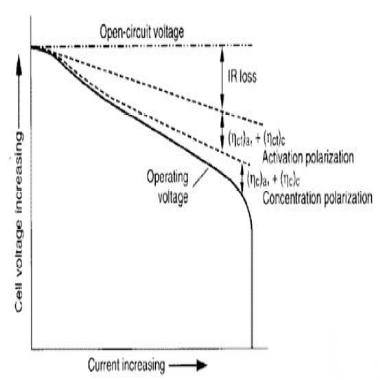
Internal resistance is the resistance of the lithium battery when it is working, the current flows through the inside of the battery. According to the test method, it can be divided into AC internal resistance and DC internal resistance. Battery internal resistance is an important parameter to identify the quality of lithium-ion batteries, the internal resistance of the battery is large, which will produce a large amount of Joule heating to cause the battery temperature to rise, resulting in a decrease in the battery discharge working voltage, shortening the discharge time, and causing serious impact on battery performance and life. In the electrochemical performance test of verifying various factors on lithium batteries, internal resistance is also an important parameter to investigate. Combined with the material and process of lithium batteries, we will share with you the influencing factors of the internal resistance of lithium batteries. Generally, the internal resistance of the battery is divided into ohmic internal resistance and polarized internal resistance. The ohmic internal resistance is composed of electrode material, electrolyte, diaphragm resistance and contact resistance of each part of the parts. Polarization internal resistance refers to the resistance caused by polarization during electrochemical reactions, including electrochemical polarization internal resistance and concentration polarization internal resistance. The ohmic internal resistance of the battery is determined by the total conductivity of the cell, and the polarization internal resistance of the battery is determined by the solid-phase diffusion coefficient of lithium ions in the active material of the electrode. First, ohm internal resistance Ohmic internal resistance is mainly divided into three parts, one is ion impedance, the other is electronic impedance, and the third is contact impedance. We hope that the internal resistance of lithium batteries is smaller and smaller, so we need to take specific measures for these three contents to reduce ohmic internal resistance. 1. Ion impedanceLithium battery ion impedance refers to the resistance to the transmission of lithium ions inside the battery. In lithium batteries, the migration rate of lithium ions and the electron conduction velocity play an equally important role, and the ion impedance is mainly affected by the positive and negative electrode materials, separators and electrolytes. To reduce the ion impedance, you need to do the following: (1) Ensure that the positive and negative electrode materials and electrolytes have good wettability. In the design of the electrode piece, it is necessary to select the appropriate compaction density, if the compaction density is too large, the electrolyte is not easy to infiltrate, which will increase the ion impedance. For the negative electrode piece, if the SEI film formed on the surface of the living substance during the first charge and discharge is too thick, the ion impedance will also be increased, and the formation process of the battery needs to be adjusted to solve it. (2) The effect of electrolyte The electrolyte should have the right concentration, viscosity and conductivity. When the viscosity of the electrolyte is too high, it is not conducive to the infiltration between it and the positive and negative active substances. At the same time, the electrolyte also needs a lower concentration, and too high a concentration is also not conducive to its flow infiltration. The conductivity of the electrolyte is the most important factor affecting the impedance of ions, which determines the migration of ions. (3) The effect of the diaphragm on ion impedance The main influencing factors of the ion impedance of the diaphragm are: electrolyte distribution in the diaphragm, diaphragm area, thickness, pore size, porosity and tortuous coefficient. For ceramic diaphragms, it is also necessary to prevent ceramic particles from clogging the pores of the diaphragm to the detriment of ions passing through. While ensuring that the electrolyte fully infiltrates the diaphragm, there can be no residual electrolyte in it, reducing the efficiency of the electrolyte. 2. Electronic impedanceThere are many influencing factors of electronic impedance, which can be improved from the aspects of materials and processes. (1) Positive and negative plates The factors affecting the electron impedance of the positive and negative plates mainly include: the contact between the living substance and the current collector, the factors of the living substance itself, the plate parameters, etc. To fully contact the current collector surface, the living substance can be considered from the adhesion of the current collector copper foil, aluminum foil substrate, and the positive and negative slurry. The porosity of the living substance itself, the surface by-products of the particles, and the uneven mixing with the conductive agent will all cause changes in the electronic impedance. Plate parameters such as the density of living matter are too small, and the particle gap is large, which is not conducive to electron conduction. (2) Diaphragm The influencing factors of the diaphragm on the electronic impedance mainly include: diaphragm thickness, porosity and by-products in the charging and discharging process. The first two are easy to understand, after the cell is disassembled, it is often found that the diaphragm is stained with a thick layer of brown substance, including graphite anodes and their reaction by-products, which will cause the diaphragm pores to be blocked and reduce the service life of the battery. (3) Current collector substrate The material, thickness, width of the current collector, and the degree of contact with the tabs all affect the electron impedance. The current collector needs to choose a substrate that is not oxidized and passivated, otherwise it will affect the impedance size. Poor welding of copper aluminum foil and tabs can also affect the electronic impedance. 3. Contact impedance The contact resistance is formed between the contact between the copper aluminum foil and the living substance, and it is necessary to focus on the adhesion of the positive and negative electrode slurries. Second, polarization internal resistance When an electric current passes through the electrode, the electrode potential deviates from the equilibrium electrode potential is called polarization of the electrode. Polarization includes ohmic polarization, electrochemical polarization, and concentration polarization, as shown in Figure 1. Polarization resistance refers to the internal resistance caused by polarization of the positive and negative electrodes of the battery during the electrochemical reaction, which can reflect the internal consistency of the battery, but is not suitable for production due to the influence of operation and method. The polarization resistance is not constant and changes with time during the charging and discharging process, because the composition of the active material, the concentration of the electrolyte and the temperature are constantly changing. Ohmic internal resistance obeys Ohm's law, and polarization internal resistance increases with increasing current density, but not linearly. It often increases linearly with the logarithm of the current density. In general, the DC internal resistance of the battery is equal to the sum of the polarization internal resistance and the ohmic internal resistance. The determination of DC internal resistance is of great significance. There are many factors that affect the internal resistance of polarization, such as charge and discharge rate, ambient temperature, SOC state, electrolyte concentration, etc. Here is an example of temperature to the internal resistance of lithium iron phosphate batteries, which need relevant literature can be privately messaged, as shown in the figure below: Third, the current battery internal resistance measurement method used in the industry In industrial applications, the precise measurement of battery internal resistance is carried out by special equipment. At present, there are two main methods for measuring the internal resistance of batteries in the industry: 1. DC discharge internal resistance measurement method According to the physical formula R=U / I, the test equipment forces the battery through a large constant DC current in a short time (generally 2~3 seconds) (currently generally uses a large current of 40A~80A), measures the voltage at both ends of the battery at this time, and calculates the current battery internal resistance according to the formula. The accuracy of this measurement method is high, and if properly controlled, the measurement accuracy error can be controlled within 0.1%. However, this method has obvious drawbacks: (1) Only large-capacity batteries or batteries can be measured, and small-capacity batteries cannot load a large current of 40A~80A in 2~3 seconds; (2) When the battery passes a large current, the electrodes inside the battery will be polarized, resulting in polarization internal resistance. Therefore, the measurement time must be very short, otherwise the measured internal resistance value error is very large; (3) High current through the battery has certain damage to the electrodes inside the battery. 2. AC pressure drop internal resistance measurement method Because the battery is actually equivalent to an active resistance, we apply a fixed frequency and fixed current to the battery (currently generally using 1kHz frequency, 50mA small current), and then sample its voltage, after a series of processes such as rectification and filtering, the internal resistance value of the battery is calculated through the op amp circuit. The battery measurement time of the AC voltage drop internal resistance measurement method is extremely short, generally about 100 milliseconds. The accuracy of this measurement method is also good, and the measurement accuracy error is generally between 1%~2%. Advantages and disadvantages of this method: (1) Almost all batteries, including small-capacity batteries, can be measured using the AC voltage drop internal resistance measurement method. This method is generally used to measure the internal resistance of notebook battery cells. (2) The measurement accuracy of the AC voltage drop measurement method is likely to be affected by the ripple current, and there is also the possibility of harmonic current interference. This is a test of the anti-interference ability in the circuit of the measuring instrument (3) Measured by this method, there will not be much damage to the battery itself. (4) The measurement accuracy of the AC voltage drop measurement method is not as good as the DC discharge internal resistance measurement method. Lastnews test 06Nextnews test 04 |